
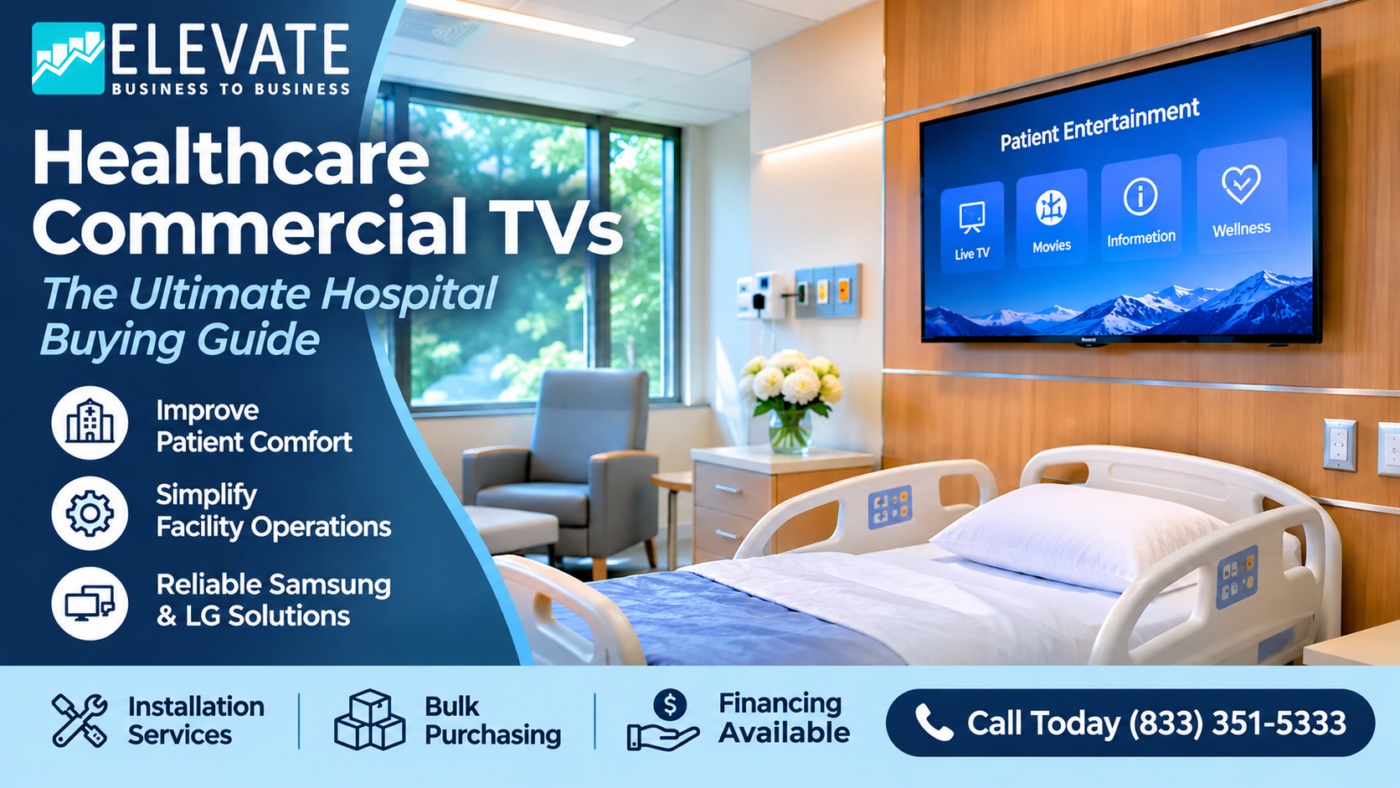
Upgrade Patient Entertainment, Improve Facility Efficiency, and Simplify Healthcare TV Procurement with Elevate B2B
Healthcare facilities need more than televisions that display channels. Hospitals, rehabilitation centers, nursing homes, assisted living communities, and medical clinics require dependable commercial television systems that support patient comfort, simplify daily operations, and withstand frequent use.
Choosing the right healthcare commercial TVs can make a meaningful difference in how patients experience their stay and how efficiently facility managers maintain their technology.
From patient rooms and waiting areas to rehabilitation centers and healthcare common spaces, commercial-grade displays provide capabilities that ordinary consumer televisions may not offer.
At Elevate B2B, we help healthcare organizations evaluate Samsung and LG commercial television solutions, coordinate equipment procurement, and plan professional installations.
Whether you’re upgrading 20 patient rooms or coordinating a television replacement project across multiple healthcare facilities, selecting the right products, mounting equipment, and delivery strategy is essential.
Ready to upgrade your healthcare facility? Call Elevate B2B at (833) 351-5333 to discuss commercial television pricing, bulk purchasing, installation options, and available financing.
Healthcare products


Understanding Healthcare Commercial TVs and Their Benefits
What Are Healthcare Commercial TVs?
Healthcare commercial TVs are television displays designed or configured for use in professional healthcare environments.
Unlike traditional residential televisions, appropriate healthcare models can offer specialized operational features, centralized configuration capabilities, commercial warranties, and compatibility with facility entertainment infrastructure.
Depending on the manufacturer and model, healthcare television solutions may support:
- Centralized channel programming and configuration.
- Patient entertainment systems.
- Commercial-grade operation and reliability.
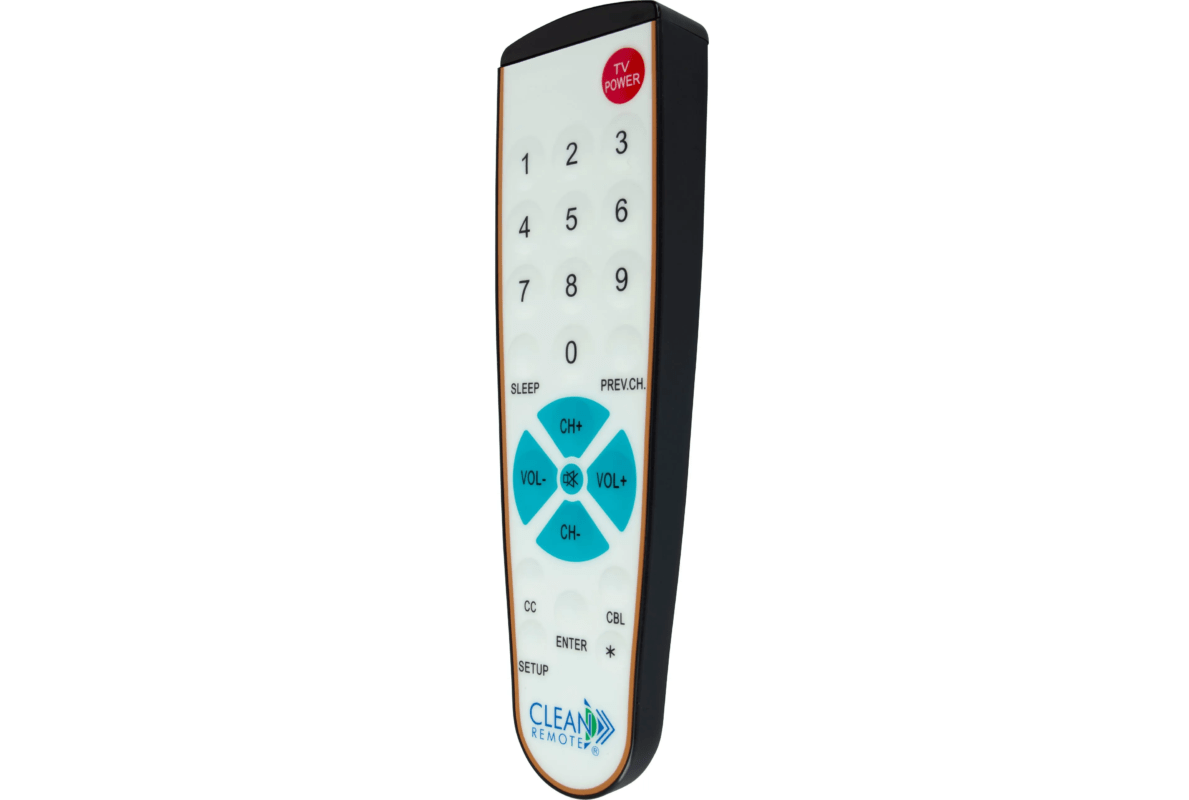
- Simplified remote control functionality.
- Volume limitations and restricted settings.
- Compatibility with hospital television distribution systems.
- Energy-management features.
- Accessible entertainment experiences.
- Integration with supported facility technology.
- Professional mounting and cable-management solutions.
Not every commercial television includes every healthcare-specific capability. For example, nurse-call integration, pillow-speaker compatibility, and patient education systems require compatible hardware, software, and infrastructure.
That distinction matters when comparing healthcare-specific television models with general-purpose commercial displays.
For healthcare purchasing teams, the goal is to select a solution that fits the facility’s requirements rather than simply purchasing the lowest-priced screen.
Why Residential TVs Are Often the Wrong Choice for Healthcare Facilities
Consumer televisions may appear attractive because of their initial purchase price. However, residential models are generally designed for private household use rather than managed healthcare environments.
A television in a hospital patient room may operate for extended periods, experience frequent channel changes, and require ongoing maintenance by facility personnel.
Consumer televisions may also lack the configuration controls needed to manage dozens or hundreds of displays consistently.
Healthcare commercial TVs can provide advantages in several areas.
Operational consistency: Compatible commercial models allow administrators to standardize settings across rooms.
Equipment management: Commercial product lines may provide features that reduce repetitive manual configuration.
Warranty suitability: Commercial warranties are often structured for business environments, although coverage and permitted use must always be confirmed.
Patient convenience: Healthcare-specific configurations can support simpler operation for patients with varying needs.
Long-term planning: Standardized models make it easier to manage replacement equipment, mounting hardware, and remote controls.
Facilities considering different television categories can explore Elevate B2B’s hospitality TV solutions to understand the broader commercial entertainment technology market.
Although hospitality and healthcare television systems share certain operational requirements, healthcare facilities may need additional patient-specific compatibility.
How Healthcare TVs Improve the Patient Experience
Patient satisfaction is influenced by many aspects of a healthcare stay, including communication, comfort, accessibility, and the surrounding environment.
Television entertainment is not a replacement for quality medical care, but it can contribute to a more comfortable patient room.
For individuals recovering from surgery, undergoing treatment, or spending extended periods in rehabilitation, familiar entertainment provides a welcome distraction.
Personalized Entertainment and Patient Comfort
Modern healthcare television systems may support entertainment options such as:
- Local and national television programming.
- Educational videos and facility information.
- Movies and entertainment content.
- Multilingual programming where available.
- Accessible channel navigation.
- Facility announcements and informational content.
Advanced systems may also support interactive applications or patient engagement platforms when the required software and integrations are installed.
Healthcare administrators should verify which capabilities are included with the television and which require separate services.
Better Accessibility for Different Patient Needs
Healthcare environments serve individuals with widely varying physical and cognitive abilities.
Television placement, screen visibility, remote control design, and sound management can all affect usability.
For example, a rehabilitation patient may need a television positioned for viewing from a hospital bed, while a long-term care resident may benefit from a simplified remote control.
A patient with limited mobility may require a compatible pillow-speaker or bedside control system.
Proper planning helps ensure that entertainment technology supports the people using it.
Reducing Frustration for Facility Staff
When patients have difficulty operating televisions, nurses and support personnel may receive additional requests for assistance.
Standardized equipment, intuitive controls, and properly configured entertainment systems can reduce avoidable television-related troubleshooting.
However, the actual operational benefits depend on the selected equipment, installation quality, and staff training.
Elevate B2B helps healthcare buyers evaluate commercial television solutions with both patient experience and facility operations in mind.
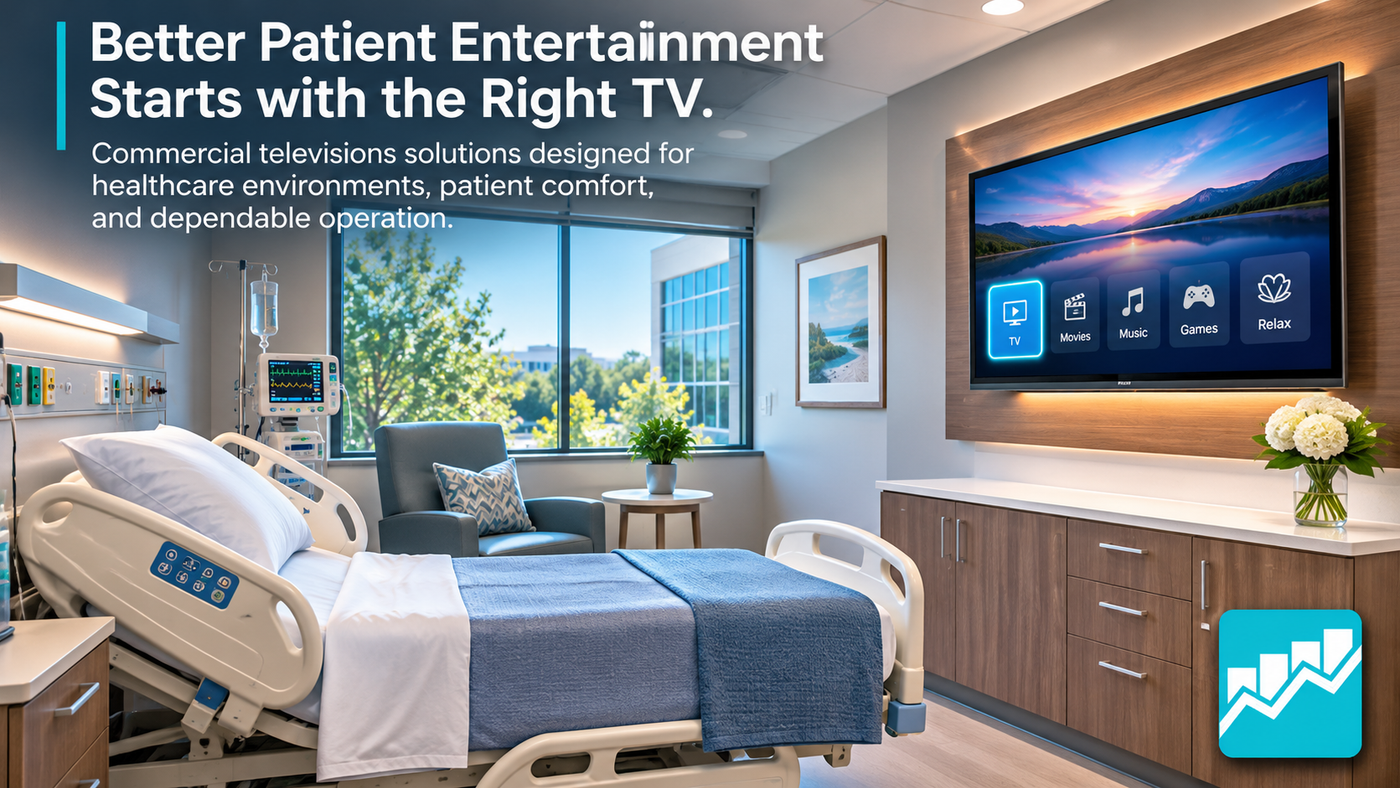
Samsung and LG Healthcare Commercial TVs: Understanding Your Options
Two major manufacturers worth evaluating for healthcare television projects are Samsung and LG.
Both offer commercial display technologies, but specific healthcare capabilities vary by product family, model, region, and availability.
Samsung Commercial TVs for Healthcare Facilities
Samsung commercial television products may be suitable for healthcare environments when the chosen model meets the facility’s operational requirements.
Depending on the product, capabilities may include commercial configuration settings, professional display management, and compatibility with supported entertainment platforms.
Healthcare administrators considering Samsung should evaluate:
- Required screen sizes.
- Centralized television management.
- Channel distribution compatibility.
- Remote control requirements.
- Mounting and connectivity options.
- Commercial warranty coverage.
- Integration with existing facility equipment.
For more information about Samsung’s broader commercial television offerings, explore Samsung Hospitality TVs.
Hospitality product features should not automatically be assumed to include healthcare-specific functions. The exact Samsung model must be verified before procurement.
LG Commercial TVs for Healthcare Facilities
LG also offers commercial television technologies suitable for evaluation in healthcare environments.
Selected LG healthcare-focused television models may support specialized patient-room requirements, including compatibility with certain hospital entertainment and control systems.
Potential considerations include:
- Patient-room entertainment compatibility.
- Commercial configuration features.
- Centralized television settings.
- Screen-size availability.
- Accessible controls.
- Supported mounting solutions.
- Manufacturer warranty terms.
Some LG healthcare television families are designed specifically around healthcare environments, making them important candidates when bedside controls or hospital distribution infrastructure are required.
Samsung vs. LG: Which Is Better for Healthcare?
There is no universal winner.
The better option depends on the facility’s requirements, installed infrastructure, purchasing budget, and available product models.
A hospital with an existing bedside control system may prioritize compatibility over display appearance.
An assisted living facility may place greater emphasis on simple navigation, durability, and convenient screen placement.
A healthcare administration building may need professional information displays rather than patient entertainment televisions.
Elevate B2B can help compare appropriate Samsung and LG products based on the intended application.
Call (833) 351-5333 to discuss Samsung and LG healthcare commercial television options.
Five Important Features to Look for in Healthcare Commercial TVs
1. Commercial-Grade Reliability
Healthcare televisions must function consistently in environments where equipment may be used throughout the day.
Look for products with manufacturer-supported commercial usage specifications and warranties appropriate for the installation.
A commercial label alone does not guarantee continuous 24-hour operation. Always confirm the rated duty cycle.
2. Centralized Configuration and Management
Managing individual televisions manually can become expensive and time-consuming.
Compatible centralized management features may allow administrators to standardize channels, settings, and operational restrictions.
The specific functionality depends on the television platform and any required management software.
3. Healthcare System Compatibility
For hospitals, integration may be one of the most important purchasing factors.
Facilities should verify compatibility with existing coaxial or IP distribution systems, patient entertainment platforms, bedside controls, and other required equipment.
A television with the wrong interfaces can create substantial additional costs.
4. Energy Efficiency
Electricity consumption matters when a facility operates large numbers of televisions.
Comparing manufacturer power specifications, standby consumption, and supported energy settings can help administrators estimate operating expenses.
5. Mounting Flexibility and Safety
Healthcare televisions must be positioned securely and appropriately.
Flat mounts, tilting mounts, and articulating arms may be suitable for different locations.
Mount selection should account for wall construction, display weight, viewing angles, accessibility, cleaning procedures, and applicable facility requirements.
Healthcare TV Installation, Bulk Purchasing, and Financing
Professional Healthcare TV Installation: Why It Matters
Purchasing the right television is only one part of a successful healthcare technology upgrade.
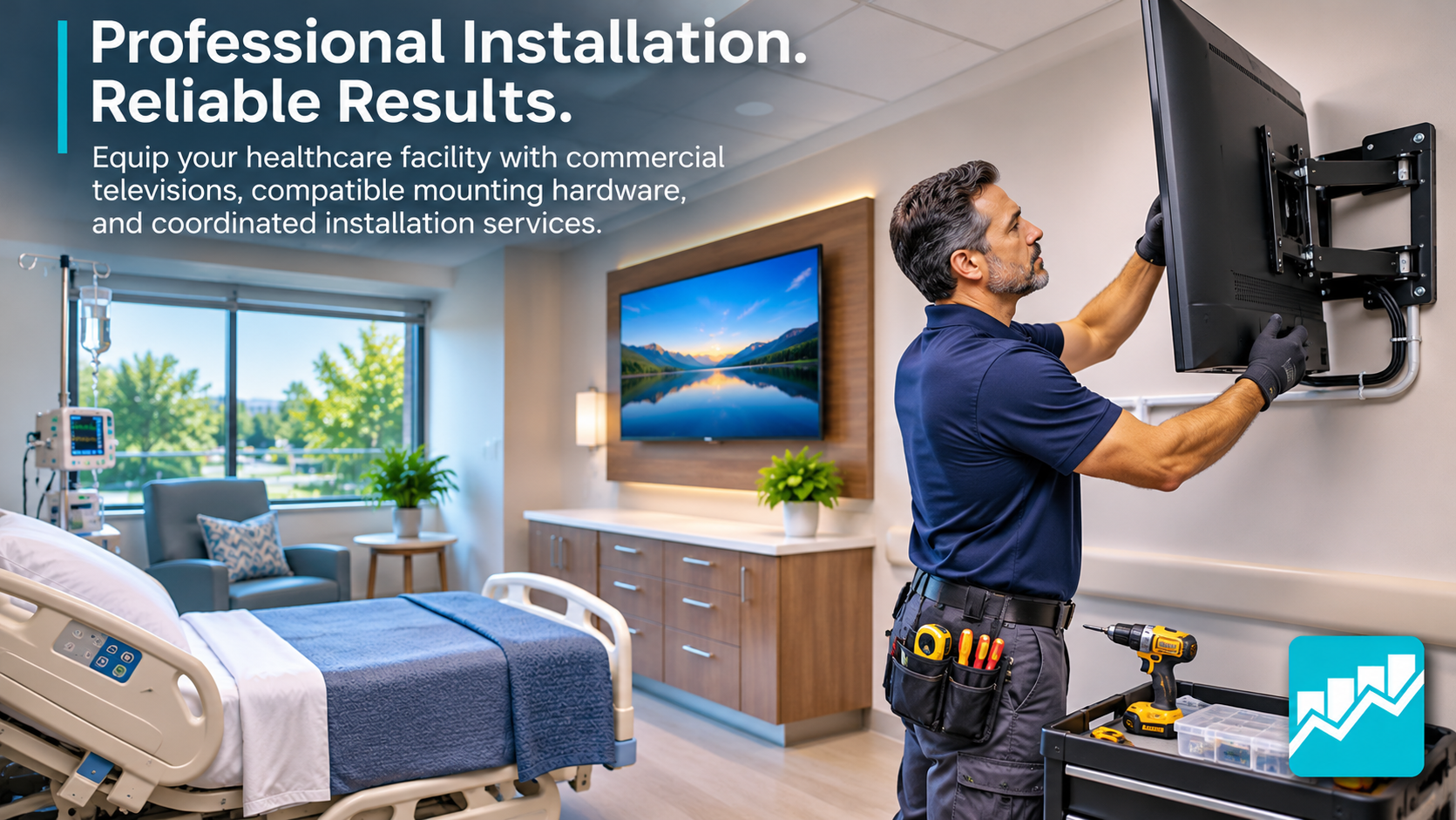
Professional installation planning is essential for safe mounting, proper wiring, consistent configuration, and reliable operation.
Healthcare environments often introduce challenges not encountered in ordinary residential installations.
These may include restricted work areas, occupied patient rooms, infection-prevention procedures, specialized wall structures, and existing communication infrastructure.
A successful installation project requires coordination between the television supplier, facility management, IT personnel, and installation professionals.
Proper TV Mounting in Patient Rooms
The best television mounting solution depends on room layout and patient needs.
Flat mounts provide a low-profile installation when the television does not need frequent repositioning.
Tilt mounts allow the screen angle to be adjusted for improved viewing from a hospital bed.
Full-motion and articulating mounts offer additional positioning flexibility where appropriate.
Pull-out and pivot mounts can provide access for maintenance or adjustment.
Every installation should use compatible mounting equipment and suitable structural support.
Healthcare facilities should also account for infection-control requirements and equipment accessibility.
Clean Cable Management and Professional Appearance
Exposed wiring can create maintenance difficulties and an unprofessional appearance.
A properly planned installation helps organize power, signal, and network connections while preserving access for future service.
Cable management should also comply with applicable electrical and healthcare facility requirements.
Elevate B2B offers installation services and television mounting solutions that can be evaluated as part of a coordinated equipment project.
Bulk Healthcare Commercial TV Purchasing: How Facilities Can Control Costs
Hospitals and healthcare organizations frequently purchase televisions in larger quantities.
Bulk purchasing can provide opportunities to standardize equipment, simplify procurement, and potentially negotiate better project pricing.
However, the lowest unit price does not necessarily represent the lowest overall project cost.
Facility managers should evaluate the complete cost of ownership.
Consider the Total Project Budget
A comprehensive healthcare television project may include:
- Commercial television hardware.
- Compatible mounting brackets.
- Remote controls and accessories.
- Signal distribution equipment.
- Delivery and freight.
- Installation labor.
- Configuration and testing.
- Removal or recycling of older equipment.
- Replacement equipment planning.
- Ongoing maintenance requirements.
Ignoring these additional expenses can lead to budget overruns.
For example, a facility purchasing 150 televisions may discover that its existing mounts are incompatible with the selected screens.
Identifying those issues before ordering can help prevent delays and unexpected expenses.
Standardize Equipment Across Departments
Standardization is especially valuable for healthcare organizations operating multiple buildings.
Using compatible television models can simplify remote control management, replacement planning, configuration, and staff familiarity.
A facility may still need different screen sizes for patient rooms, waiting areas, and common spaces.
The objective is to reduce unnecessary variation while meeting the needs of each environment.
Coordinate Deliveries with Installation Schedules
Healthcare projects often require phased installation to minimize disruption.
Televisions may need to arrive in scheduled groups rather than all at once.
Coordinating procurement, freight, and installation can help prevent storage problems and project delays.
Elevate B2B offers supply chain solutions and rescue delivery services that healthcare buyers can discuss when planning equipment purchases.
Need pricing for 25, 50, 100, or more healthcare commercial TVs? Contact Elevate B2B at (833) 351-5333 for a project-specific quote.
Healthcare Commercial TV Financing: Upgrade Without Paying Everything Upfront
Replacing commercial televisions throughout a healthcare facility can represent a substantial capital investment.
That expense may compete with other priorities, including medical equipment, building improvements, and technology infrastructure.
Financing is available through Elevate B2B, providing a potential purchasing option for qualifying organizations.
Rather than assuming every television and installation expense must be paid in one transaction, healthcare administrators can explore financing options as part of their procurement strategy.
Visit the Elevate B2B Financing Page to learn more and inquire about available financing arrangements.
Why Healthcare Facilities Consider Financing
Financing may help organizations:
- Preserve available working capital.
- Plan equipment purchases around operational budgets.
- Coordinate larger technology upgrades.
- Replace aging equipment across multiple departments.
- Evaluate predictable payment structures when offered.
Actual terms, eligible equipment, payment amounts, approval requirements, and available programs must be confirmed directly.
Financing is subject to applicable program terms and approval.
Example: Planning a 100-Room Television Replacement
Consider a rehabilitation facility replacing 100 aging televisions.
Instead of selecting equipment solely by upfront price, administrators could compare commercial-grade options, mounting requirements, freight expenses, and installation costs.
The facility could then request a complete project quote and inquire whether financing is available for the proposed purchase.
This approach allows decision-makers to evaluate both the equipment and potential payment options before committing.
Explore healthcare TV financing options or call Elevate B2B at (833) 351-5333.
Healthcare Digital Signage: More Than Patient Entertainment
Healthcare commercial displays are useful beyond patient rooms.
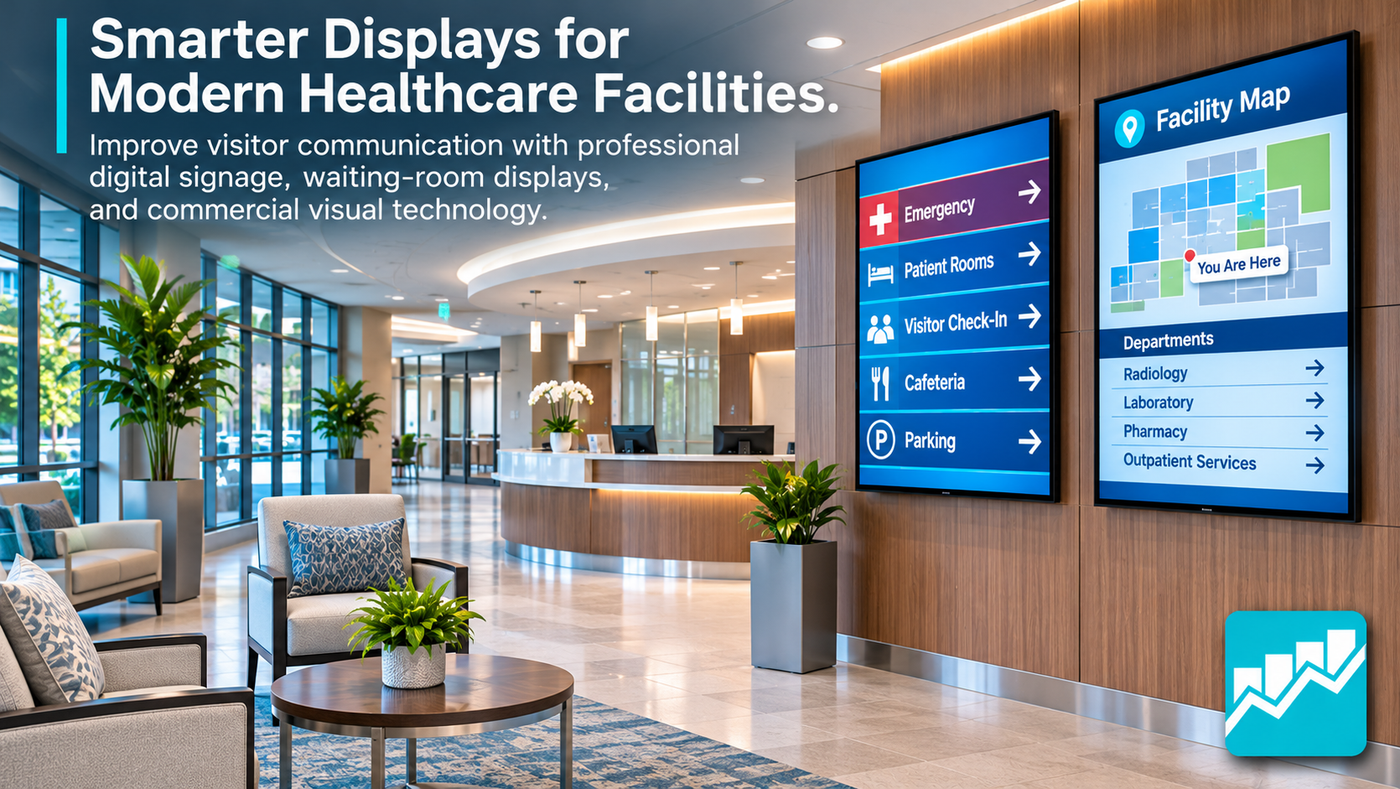
Hospitals and medical facilities also need reliable visual communication in waiting areas, lobbies, administrative offices, and public spaces.
Commercial digital signage can support patient navigation, facility announcements, and general information.
Digital Signage for Hospital Waiting Rooms
Waiting areas can benefit from professional displays presenting:
- General facility announcements.
- Department information.
- Visitor guidance.
- Health education content.
- Appointment preparation instructions.
- Non-sensitive informational programming.
Healthcare administrators should ensure that any displayed content follows applicable privacy and accessibility requirements.
Digital Wayfinding and Facility Communication
Large medical campuses can be difficult for visitors to navigate.
Digital directories and informational displays may help communicate department locations, visitor instructions, and other general guidance.
Touch-enabled displays may also be considered where appropriate.
Elevate B2B offers commercial display products from manufacturers including Samsung, LG, NEC, Philips, and Sharp.
Explore Digital Signage Solutions for additional information.
Facilities comparing commercial communication technologies can also review Hospitality Digital Signage for examples of display applications in professionally managed environments.
Healthcare TV Buying Strategy, Case Studies, and FAQs
Choosing the Right Healthcare TV System for Your Facility
Not every healthcare facility needs the same entertainment infrastructure.
A major hospital may require specialized patient television systems with bedside controls and integration requirements.
An outpatient clinic may only need commercial displays for waiting rooms.
A long-term care community may prioritize straightforward television operation and dependable service.
Before purchasing, facility managers should answer several questions.
What Is the Primary Purpose of the Television?
Identify whether the equipment will be used for patient entertainment, public information, staff communication, or administrative presentations.
This decision affects the type of display, required software, and connectivity.
What Existing Infrastructure Must Be Supported?
Review existing television signal distribution, network connections, mounting hardware, and control systems.
Older facilities may have infrastructure that limits available product choices.
How Many Displays Are Required?
Prepare an accurate inventory of existing televisions and planned replacements.
Include screen sizes, room locations, mounting requirements, and special installation conditions.
Who Will Manage the System?
Determine whether IT personnel, facilities management, nursing support teams, or an outside provider will handle configuration and maintenance.
The answer may influence the value of centralized management features.
What Is the Available Budget?
Calculate the expected equipment, installation, and operating costs.
Request a detailed quote and explore available financing before finalizing the purchasing decision.
Healthcare Commercial TVs vs. Hospitality TVs
Healthcare and hospitality television systems have several similarities.
Both markets benefit from dependable commercial equipment, standardized settings, simplified operation, and efficient procurement.
However, their technical requirements are not identical.
Hospitality television systems are commonly designed around hotel entertainment platforms, guest-room customization, and property management requirements.
Healthcare systems may need compatibility with patient entertainment infrastructure, specialized controls, and hospital operational procedures.
A hospitality television should not be purchased for a hospital simply because it is commercial-grade.
For a detailed introduction to professional guest-room television technology, read Elevate B2B’s Guide to Hospitality TV.
You can also explore the company’s Hotel TV Solutions resource to understand the commercial procurement and installation considerations shared by both industries.
The key is to verify model-specific compatibility before making a large purchase.
Healthcare TV Case Studies: Three Practical Project Scenarios
The following illustrative case studies demonstrate common healthcare television purchasing situations. They are planning examples, not claims about completed Elevate B2B customer projects.
Case Study 1: Hospital Patient-Room Television Modernization
Facility: Regional hospital with 120 patient rooms.
Challenge: The hospital operates a mixture of older television models, making maintenance and configuration inconsistent.
Some rooms require replacement mounting hardware, while others have legacy signal connections.
Proposed solution: Conduct a room-by-room equipment assessment, verify compatibility with the existing television distribution system, and select a standardized healthcare television model.
Coordinate installation in phases to reduce disruption.
Expected benefits: More consistent patient entertainment, simplified equipment management, and improved replacement planning.
Important consideration: Any patient control integration must be tested before the full deployment.
Case Study 2: Rehabilitation Center Entertainment Upgrade
Facility: Rehabilitation center with 65 resident rooms.
Challenge: Existing televisions have limited viewing flexibility, and the facility wants to improve comfort without exceeding its equipment budget.
Proposed solution: Evaluate commercial televisions with suitable screen sizes, compatible articulating mounts where appropriate, and straightforward remote controls.
Request bulk equipment pricing and compare available financing options.
Expected benefits: Improved viewing flexibility, standardized equipment, and a more manageable procurement process.
Important consideration: Mounting hardware must be appropriate for the room layout and structural conditions.
Case Study 3: Medical Campus Digital Signage Expansion
Facility: Multi-building outpatient medical campus.
Challenge: Visitors frequently need assistance finding departments, and printed directories require regular updates.
Proposed solution: Evaluate centrally managed commercial digital signage displays for selected entrances, waiting areas, and corridor locations.
Create a consistent content strategy for general directions and visitor information.
Expected benefits: Easier communication of facility information and less reliance on printed directional materials.
Important consideration: Display content must be accessible, accurate, and appropriate for a healthcare environment.
What These Scenarios Demonstrate
Successful healthcare display projects require more than selecting a screen size.
They depend on proper product selection, compatibility verification, equipment standardization, procurement planning, and professional installation.
Elevate B2B can help organizations begin evaluating these requirements and request appropriate equipment solutions.
Why Healthcare Facilities Should Choose Elevate B2B
Healthcare technology purchases involve numerous decisions, from television specifications to freight coordination and installation planning.
Working with a commercial equipment supplier can help simplify the purchasing process.
Elevate B2B serves healthcare, hospitality, casino, and commercial markets with television and display solutions.
Access to Recognized Commercial Display Brands
Elevate B2B offers Samsung and LG television solutions and commercial display products from several established manufacturers.
This allows purchasing teams to evaluate products based on facility needs rather than relying on a single consumer television category.
Bulk Procurement and Supply Chain Support
Healthcare organizations often need equipment delivered to multiple rooms, departments, or facilities.
Elevate B2B provides supply chain solutions and rescue delivery services for commercial equipment projects.
Discuss your project requirements to determine available delivery and coordination options.
Professional Installation and Mounting Solutions
Proper television mounting and configuration are essential to a successful upgrade.
Elevate B2B offers installation services and a range of mounting solutions, including flat, tilt, articulating, pivot, and other specialized mounts.
Installation availability and scope should be confirmed for each project location.
Financing Available for Qualifying Projects
Equipment financing may help healthcare organizations manage the cost of larger purchases.
Learn more through Elevate B2B Financing.
Assistance with Equipment Selection
Choosing between television models can be complicated, especially when healthcare-specific compatibility is required.
Elevate B2B can help buyers discuss project requirements, available equipment, and purchasing considerations before placing an order.
Get started today. Call (833) 351-5333 or visit Elevate B2B to request assistance with your healthcare commercial TV project.
Frequently Asked Questions About Healthcare Commercial TVs
1. What is the difference between healthcare commercial TVs and regular TVs?
Healthcare commercial TVs are selected for professional healthcare applications and may include specialized controls, centralized configuration, commercial warranties, and compatibility with patient entertainment infrastructure.
Residential televisions generally lack many of these facility-management capabilities.
2. What are the best TV brands for hospitals?
Samsung and LG are established manufacturers worth considering for healthcare commercial television projects.
The best choice depends on the exact model, patient-room requirements, system compatibility, warranty, and budget.
3. Can healthcare commercial TVs connect to nurse-call systems?
Some healthcare-specific television systems support integration with compatible nurse-call or bedside control infrastructure.
Compatibility is not universal and must be confirmed with the television manufacturer and system provider.
4. Do hospitals need commercial-grade televisions?
Commercial-grade or healthcare-specific televisions are generally preferable when a facility needs centralized settings, professional warranty coverage, specialized connectivity, or consistent operation across many rooms.
The facility’s requirements determine which product category is appropriate.
5. Can healthcare facilities purchase TVs in bulk?
Yes. Healthcare organizations can request bulk commercial television pricing through Elevate B2B.
Project quotes can account for quantities, screen sizes, mounting equipment, delivery, and other requirements.
Call (833) 351-5333 to discuss your purchase.
6. Is financing available for healthcare commercial TVs?
Yes, financing is available through Elevate B2B for qualifying purchases, subject to program terms and approval.
Visit the Financing Page to inquire about options.
7. What screen size is best for hospital patient rooms?
The appropriate screen size depends on viewing distance, room dimensions, patient positioning, and mounting location.
Common commercial display sizes may include 32-inch, 43-inch, 50-inch, and 55-inch options, depending on model availability.
A room assessment can help determine the best fit.
8. Can healthcare TVs provide streaming services?
Some commercial television systems support streaming capabilities, but availability depends on the hardware, software, licensing, network configuration, and entertainment platform.
Consumer streaming functionality should not be assumed to work identically in managed healthcare environments.
9. Do healthcare commercial TVs require special installation?
Some projects require specialized mounting, signal connections, network configuration, or compatibility testing.
Professional installation planning is recommended, particularly for large deployments and occupied healthcare environments.
10. Can commercial TVs be used in nursing homes and assisted living facilities?
Yes. Commercial televisions can be appropriate for resident rooms, common areas, and activity spaces.
Facilities should prioritize ease of use, viewing comfort, reliability, and any accessibility requirements.
11. Can Elevate B2B help with TV mounts and accessories?
Elevate B2B offers commercial television mounting solutions and accessories, including flat mounts, tilt mounts, articulating mounts, remote controls, and related equipment.
Contact the team to confirm compatibility with your selected displays.
12. How do I request a healthcare commercial TV quote?
Contact Elevate B2B at (833) 351-5333 or visit Elevate B2B to discuss your project.
Having your approximate television quantity, preferred screen sizes, facility location, and installation requirements ready will help with the quoting process.
Upgrade Your Healthcare Commercial TVs with Elevate B2B Today
Healthcare organizations deserve television and display solutions that support patient comfort, dependable operation, and efficient facility management.
Whether you’re replacing outdated patient-room televisions, upgrading a rehabilitation center, installing waiting-room digital signage, or planning a multi-facility equipment purchase, selecting the right technology is an important investment.
Elevate B2B is here to help you evaluate commercial television options, compare appropriate Samsung and LG products, coordinate purchasing requirements, and explore available installation solutions.
Financing is available for qualifying projects, giving healthcare organizations another option when planning equipment upgrades.
Don’t let aging televisions, inconsistent equipment, or poorly planned installations complicate your next facility improvement project.
Call Elevate B2B Today: (833) 351-5333
Visit Elevate B2B to contact the team or book an appointment online.
Better Healthcare Displays. Smarter Procurement. Professional Solutions. Elevate B2B.
