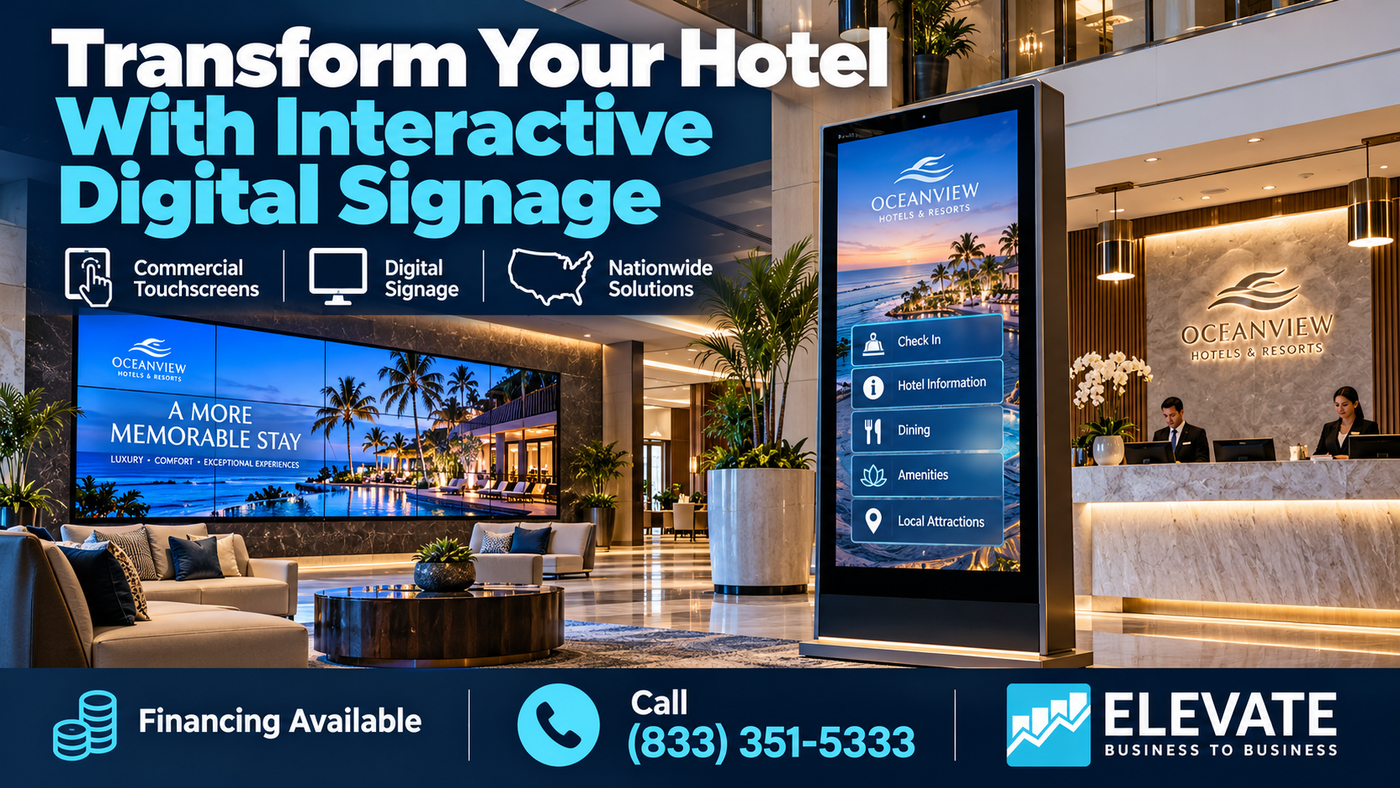
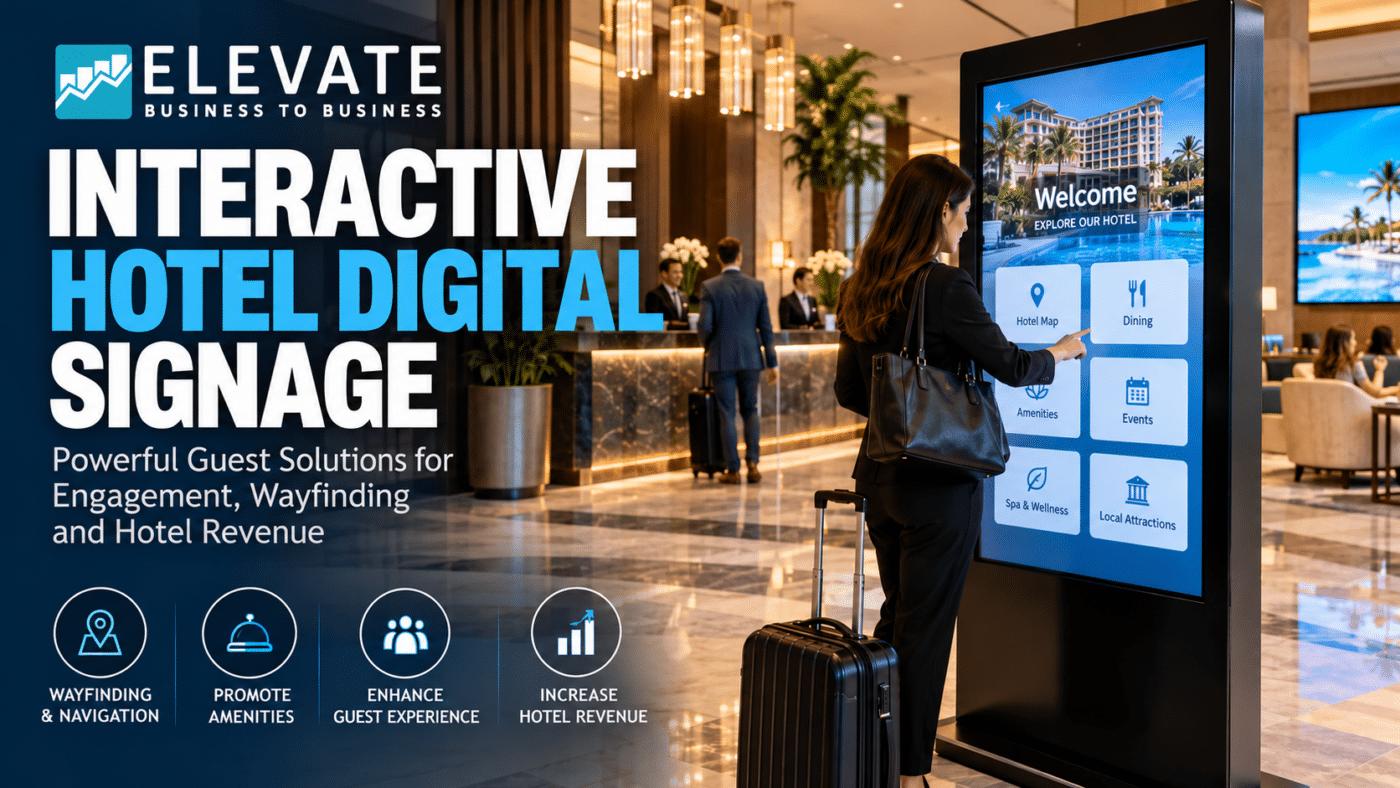
Transform Your Hotel Into a Smarter, More Engaging Guest Experience With Interactive Digital Displays
Today’s hotel guests expect more than comfortable rooms and friendly service. They want convenience, immediate access to information, effortless navigation, and modern technology that makes their stay easier.
Interactive hotel digital signage helps hotels deliver these experiences while creating new opportunities to promote amenities, reduce repetitive front desk questions, and improve operational efficiency.
From touchscreen wayfinding kiosks and digital concierge displays to conference center directories and interactive lobby screens, modern signage technology is changing how hotels communicate with guests.
For hotel owners and property managers, the challenge is selecting commercial-grade equipment that delivers long-term value without creating unnecessary maintenance costs or complicated technology requirements.
That’s where Elevate B2B can help.
Elevate B2B provides hospitality technology solutions nationwide, including commercial digital displays, touchscreen systems, video walls, hospitality televisions, mounting equipment, and installation services.
Whether you’re upgrading a boutique hotel, renovating a large resort, or purchasing displays for multiple properties, Elevate B2B can help you evaluate equipment, plan your project, and explore available financing.
Ready to modernize your property? Call Elevate B2B at (833) 351-5333 or contact our hospitality technology team to discuss your project and request competitive pricing.
Table of Contents
How Interactive Hotel Digital Signage Is Transforming Hospitality
What Is Interactive Hotel Digital Signage?
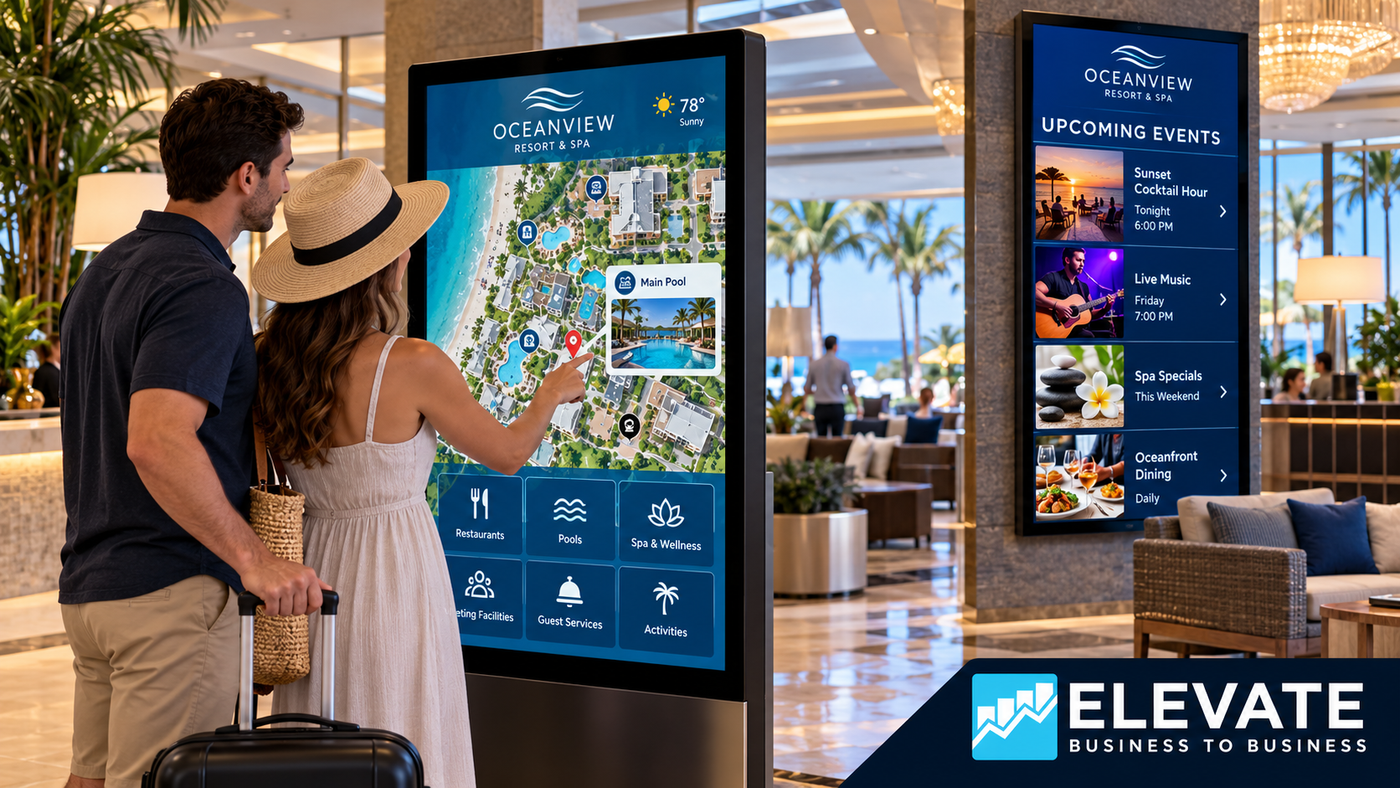
Interactive hotel digital signage refers to commercial display systems that allow guests to actively engage with hotel information through touchscreen interfaces or other supported interactive technologies.
Unlike traditional signage that simply displays information, interactive signage enables guests to choose what they want to see.
For example, a guest arriving at a large resort might approach a touchscreen display in the lobby and select:
- Hotel maps and interactive directions.
- Restaurant menus and dining hours.
- Conference schedules and meeting locations.
- Spa treatments and wellness services.
- Local attractions and transportation information.
- Hotel amenities and recreational activities.
- Event announcements and promotional offers.
Instead of waiting in line at the front desk, guests can access relevant information independently.
Interactive signage can also help employees focus on requests that require personal assistance rather than repeatedly answering basic questions about directions, restaurant hours, or facility locations.
Hotels interested in broader display technology can explore Elevate B2B’s commercial digital signage solutions to understand the equipment options available for hospitality environments.
Why Traditional Hotel Signage Is No Longer Enough
Printed hotel directories, paper event schedules, and static directional signs have served the hospitality industry for decades.
However, these traditional communication methods have significant limitations.
Printed signs become outdated when information changes. Conference schedules must be replaced when meeting rooms are reassigned. Restaurant promotions require new materials, and seasonal announcements may involve additional printing expenses.
Interactive hotel digital signage offers a more flexible alternative.
With a compatible content management system, hotel staff can update supported displays without physically replacing printed materials.
Consider a conference hotel hosting several corporate events simultaneously.
When a meeting moves from one ballroom to another, an authorized employee can update the digital directory so attendees receive current information.
Similarly, a resort can change dining promotions, update activity schedules, or highlight seasonal services without repeatedly printing new signs.
The result is a more adaptable communication system that can support both guest convenience and operational efficiency.
Five Major Benefits of Interactive Hotel Digital Signage
1. Improve the Hotel Guest Experience
Guest satisfaction often depends on how easily visitors can access services and navigate the property.
Interactive touchscreen displays give guests greater control over their experience.
A traveler arriving late may want to locate an open restaurant. A family may need directions to the swimming pool. A conference attendee may need to find a meeting room quickly.
Interactive signage makes this information accessible from a convenient location.
When properly designed, these systems can also offer multilingual content, accessibility features, and intuitive navigation.
2. Reduce Repetitive Front Desk Questions
Hotel employees frequently answer the same questions throughout the day.
Where is the fitness center? What time does breakfast begin? Which elevator leads to the conference rooms?
An interactive digital directory can answer many routine questions.
This does not replace personal hospitality. Instead, it allows staff members to dedicate more attention to check-ins, guest concerns, special requests, and other services that benefit from human interaction.
3. Promote Additional Hotel Revenue Opportunities
Interactive hotel digital signage can serve as a digital marketing channel within the property.
Hotels can highlight spa packages, premium dining experiences, late checkout options, upgraded accommodations, and other revenue-generating services.
For example, a guest exploring the resort directory might discover a restaurant promotion or spa treatment that was not part of the original travel plans.
A touchscreen display can provide additional information and, when supported by appropriate software integrations, direct the guest toward a reservation or purchase.
Actual revenue results depend on guest engagement, placement, offers, and system capabilities.
4. Strengthen Hotel Branding
A modern hotel lobby communicates professionalism before a guest reaches the front desk.
Interactive displays can reinforce the property’s visual identity through branded interfaces, professional photography, customized welcome messages, and coordinated promotional content.
Luxury resorts may favor elegant touchscreen kiosks with minimalist navigation, while family-oriented hotels may prioritize colorful, straightforward interfaces.
The technology should complement the property’s atmosphere rather than compete with it.
5. Improve Communication Across the Property
Hotels operate multiple departments with different communication needs.
Front desk staff, restaurant managers, event coordinators, and maintenance teams may all need to distribute timely information.
A centrally managed signage system can help coordinate approved content across compatible displays.
This is particularly useful for larger hotels, convention properties, casinos, and resorts where guests move between numerous facilities.
For additional hospitality applications, read Elevate B2B’s article on 10 creative ways to use digital signage in hotels and resorts.
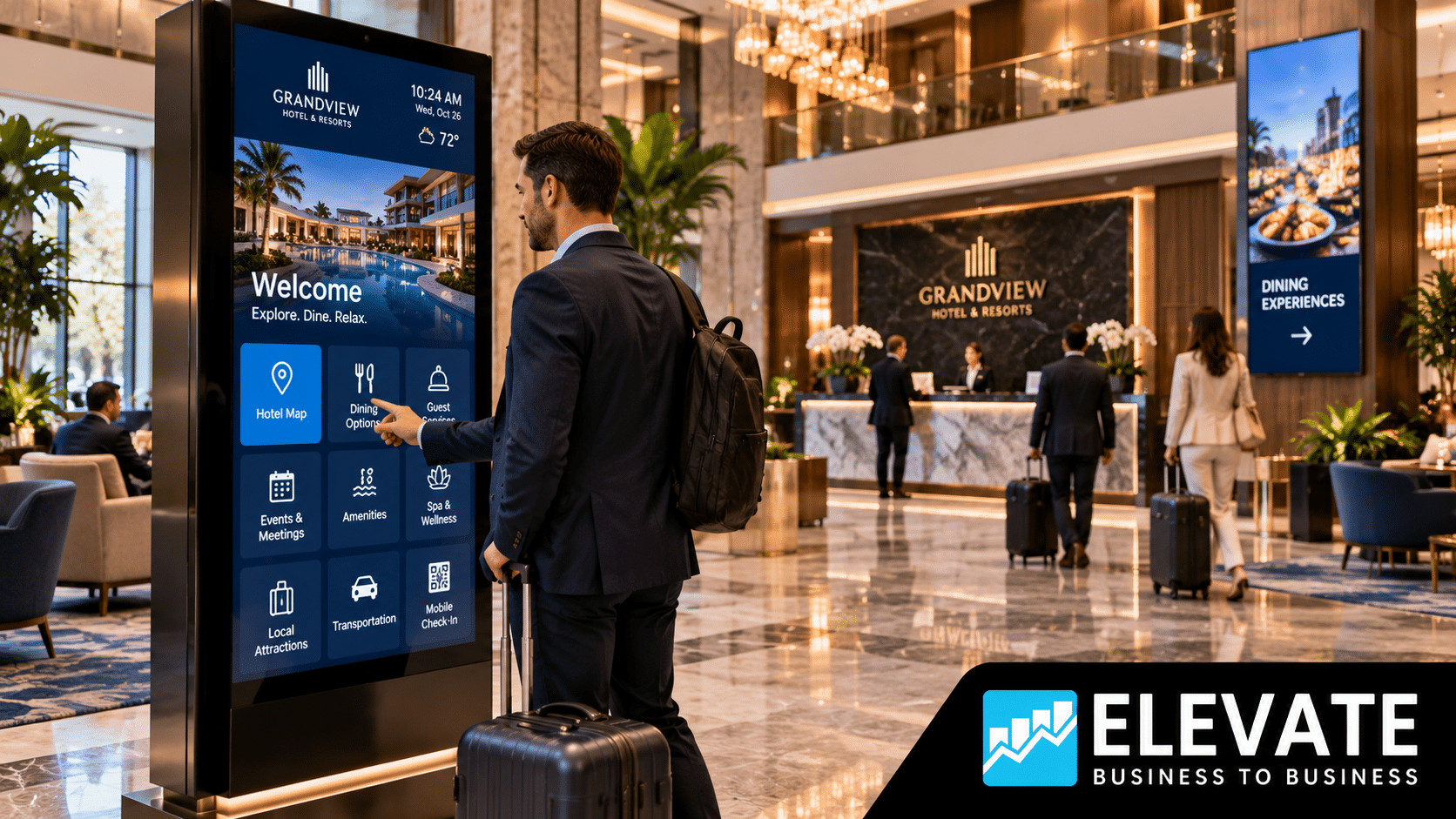
Where Should Hotels Install Interactive Digital Signage?
Choosing the right installation location is just as important as selecting the display.
A sophisticated touchscreen placed in an inconvenient corner may receive little attention. A properly positioned display near a natural guest traffic area can become a useful resource.
Hotel Lobbies and Reception Areas
Lobby touchscreen kiosks can provide property maps, amenity directories, event information, and local recommendations.
Displays should be easy to locate without obstructing pedestrian traffic or accessibility routes.
Conference Centers and Meeting Rooms
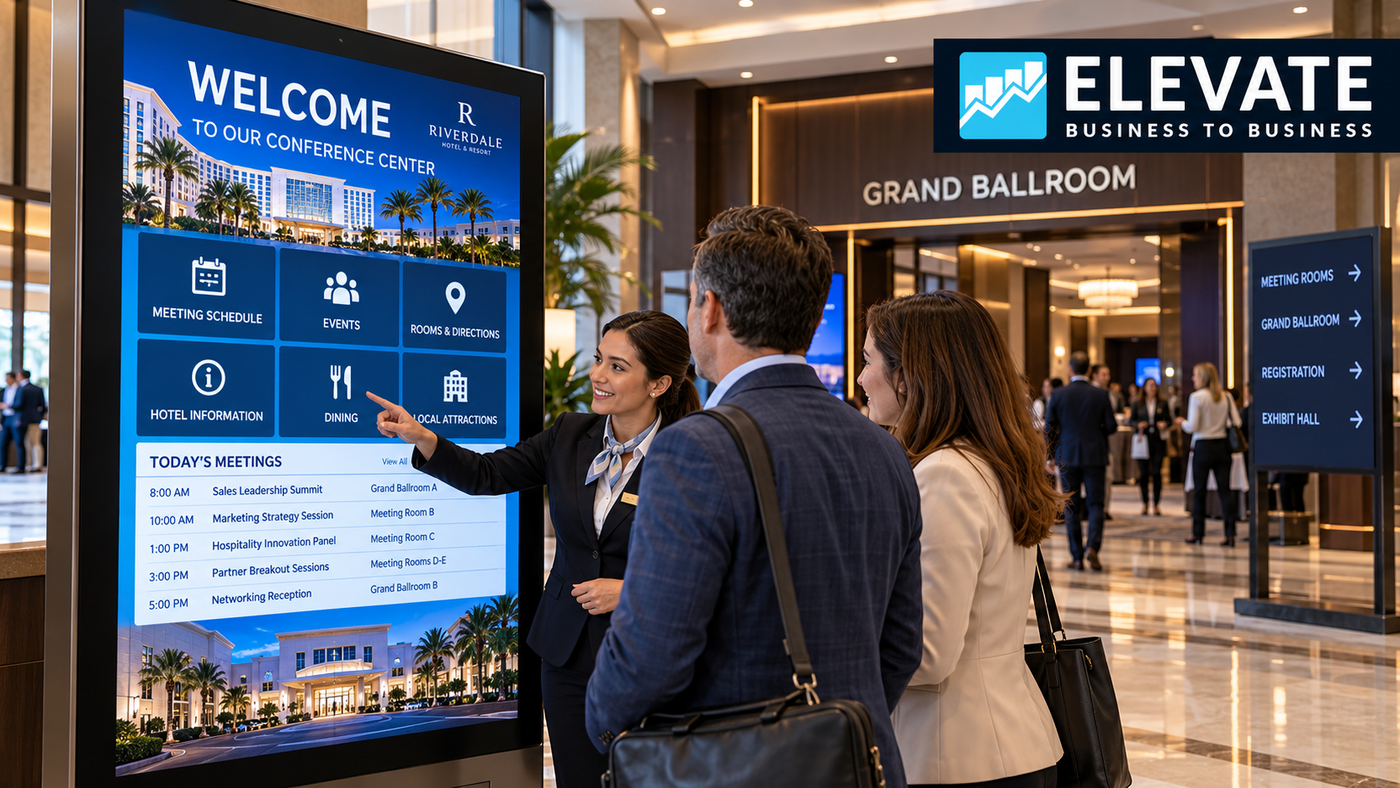
Hotels hosting business conferences benefit from digital event directories that display meeting schedules, room assignments, speaker information, and directional guidance.
Interactive directories are especially valuable when multiple events share the same facility.
Restaurants and Dining Areas
Digital menus can showcase dining options, operating hours, special promotions, and food photography.
Interactive systems may also support menu browsing or ordering when compatible software is available.
Elevator Lobbies and Hallways
Strategically positioned displays can provide floor directories, event announcements, and directions to hotel amenities.
Not every location requires a touchscreen. In some cases, a conventional commercial display provides better value.
Resorts, Casinos, and Entertainment Properties
Large hospitality properties can use interactive maps to guide visitors toward restaurants, entertainment venues, conference facilities, pools, and recreational activities.
For expansive properties, clear wayfinding can be one of the most practical reasons to invest in interactive signage.
Elevate B2B can help property managers compare hospitality digital signage solutions for different areas of their facilities.
Choosing the Right Interactive Digital Signage Equipment
Commercial Touchscreen Displays vs. Consumer Televisions
One of the most important purchasing decisions involves selecting equipment designed for commercial environments.
A standard consumer television may appear less expensive initially, but it is not necessarily suitable for an interactive hotel installation.
Commercial touchscreen displays are built for business applications and may offer specialized mounting configurations, compatible control systems, extended operating schedules, and commercial support options.
Hotels should evaluate equipment based on actual operating conditions rather than purchase price alone.
Important considerations include:
- Operating hours: Select a display rated for the property’s intended daily usage.
- Touchscreen technology: Confirm responsiveness, touch accuracy, and the number of supported touchpoints.
- Screen brightness: Match display brightness to lobby lighting and potential sunlight exposure.
- Durability: Evaluate commercial construction, screen protection, and expected guest usage.
- Content management: Confirm compatibility with the intended software platform.
- Connectivity: Review networking, media player, and control requirements.
- Warranty coverage: Compare manufacturer terms, commercial-use restrictions, and service procedures.
- Accessibility: Consider reachable controls, readable interfaces, and applicable accessibility requirements.
A display that works well in a quiet boutique hotel may not be appropriate for a busy casino lobby or convention center.
Samsung Interactive Displays for Hotels
Samsung offers commercial display technologies suitable for various hospitality and business applications.
Depending on the product series, Samsung displays can support interactive collaboration, digital content presentation, or professional visual communication.
For hotels, the right solution depends on whether the display will function as a guest-facing touchscreen, a meeting-room collaboration device, or a centrally managed information screen.
A conference hotel, for example, may benefit from interactive displays that support presentations, annotations, and collaborative meetings.
A lobby wayfinding system may require different hardware and specialized kiosk software.
Property managers should verify touchscreen functionality and software compatibility for each specific model.
Hotels considering a broader technology renovation can also review Samsung hospitality TVs for guest room entertainment applications.
LG Commercial Displays for Hospitality
LG provides commercial display solutions that can support hotel communication, branding, and information delivery.
Depending on the model and configuration, LG equipment may be appropriate for lobby signage, restaurant displays, conference facilities, and interactive applications.
When selecting LG equipment, hotel operators should compare operating ratings, brightness, content management compatibility, and touchscreen requirements.
A well-designed signage project may combine interactive touch displays with noninteractive commercial screens throughout the property.
Read Elevate B2B’s guide to LG digital signage for hotels for additional information about hospitality display applications.
Other Commercial Display Brands
Beyond Samsung and LG, Elevate B2B offers commercial display solutions from manufacturers including NEC, Philips, and Sharp.
Different brands and product families may offer advantages for specific environments, screen sizes, mounting arrangements, and operational requirements.
The goal is not simply to choose the most recognizable manufacturer.
It is to select equipment that matches the hotel’s intended application, technical infrastructure, budget, and long-term maintenance expectations.
Interactive Digital Signage Software and Content Management
Hardware represents only one part of a successful interactive signage project.
The software determines what guests see, how they navigate information, and how hotel employees manage content.
A hotel digital signage content management system may provide features such as remote content updates, scheduling, user permissions, display monitoring, and multimedia presentation.
Interactive applications may require additional software designed specifically for touchscreen navigation.
Before purchasing equipment, hotel operators should ask several questions.
Can the system be updated remotely? Can different departments manage their own approved content? Does it support multiple languages? What happens when the internet connection fails? Can staff restore the interface quickly if an application freezes?
Hotels should also determine whether the system needs to integrate with a property management system, restaurant reservation platform, event calendar, or other business application.
These integrations should be verified before equipment is ordered.
Not every commercial display supports every software platform or integration.
Interactive Wayfinding: A Practical Investment for Large Hotels
Interactive wayfinding is one of the most valuable applications for large hospitality properties.
Consider a resort with several guest towers, multiple restaurants, conference rooms, and recreational facilities.
A guest may know the name of a destination but not its location.
An interactive directory can help the guest identify the destination, view a property map, and follow a suggested route.
For conference properties, the same technology can help visitors locate specific meeting rooms and event spaces.
Well-designed wayfinding should use readable text, intuitive navigation, clear directional information, and appropriate accessibility considerations.
Some systems can also provide QR codes that allow guests to transfer directions to their smartphones.
These capabilities depend on the software and hardware selected.
Video Walls and Interactive Displays: Understanding the Difference
Hotel owners sometimes use the terms digital signage, video walls, and interactive displays interchangeably.
However, they serve different purposes.
A video wall typically combines multiple commercial displays into a larger visual presentation. It is commonly used for branding, entertainment, advertising, or immersive lobby experiences.
An interactive display allows users to engage directly with content through touch or another supported input method.
A standard digital signage display presents scheduled information, advertisements, announcements, or other content without requiring guest interaction.
Hotels may benefit from combining all three.
For example, a resort could install a large Samsung video wall behind the reception area, touchscreen wayfinding kiosks near the elevators, and commercial displays outside conference rooms.
Each system serves a distinct purpose while supporting a consistent guest experience.
Professional Installation Makes a Difference
Even high-quality commercial displays can perform poorly when installation is not properly planned.
Hotel signage projects may require electrical coordination, network connectivity, secure mounting, cable management, content configuration, and accessibility planning.
Poor placement can create glare, obstruct walking areas, or make touchscreen controls difficult to reach.
Improper cable management can also undermine the professional appearance of an otherwise expensive installation.
Elevate B2B offers installation services and commercial mounting solutions to help hospitality businesses plan complete equipment projects.
Installation scope and availability should be confirmed for the property and equipment involved.
For properties replacing existing equipment, the digital signage retrofit guide explains how upgrading displays and infrastructure may provide a practical alternative to replacing every component.
Ready to plan your hotel signage upgrade? Contact Elevate B2B at (833) 351-5333 to discuss display selection, project pricing, installation requirements, and financing options.
Hotel Digital Signage Costs, Case Studies, Financing, and Implementation
How Much Does Interactive Hotel Digital Signage Cost?
The cost of interactive hotel digital signage depends on several factors, including display size, touchscreen capabilities, installation complexity, software requirements, and the number of locations.
A small boutique hotel installing one interactive lobby kiosk will have different requirements than a 500-room resort installing multiple wayfinding displays, conference directories, and promotional screens.
Hotel owners should evaluate the complete project cost rather than comparing display prices alone.
A comprehensive budget may include commercial touchscreen displays, mounting equipment, signage stands, media players, content management software, network infrastructure, installation labor, shipping, and ongoing support.
For example, a hotel may purchase a commercial touchscreen display but later discover that interactive wayfinding software requires a separate license.
Another property may need electrical upgrades or additional networking equipment before installation can begin.
These expenses should be identified during the planning process.
Elevate B2B helps hospitality purchasing teams evaluate complete equipment requirements and request competitive project pricing.
For properties also upgrading guest room entertainment, explore the company’s complete hospitality TV solutions and guide to hospitality TV technology.
How Interactive Digital Signage Can Deliver a Return on Investment
The financial value of interactive signage is not limited to advertising revenue.
Hotels may benefit from improved guest communication, fewer manual content updates, more effective amenity promotion, and reduced reliance on printed materials.
Consider a property that regularly hosts conferences.
Its staff may spend considerable time replacing event schedules, directing attendees, and answering questions about room locations.
A centrally managed digital directory could reduce some of those repetitive tasks while helping guests find meeting spaces more efficiently.
Similarly, a resort could promote restaurant specials, spa services, and premium activities through interactive lobby displays.
To evaluate potential return on investment, management should monitor measurable indicators such as:
- Number of touchscreen interactions.
- Most frequently accessed information.
- Guest questions about directions and amenities.
- Staff time spent updating signs.
- Promotional inquiries and attributable reservations.
- Printing and replacement costs.
- Display uptime and maintenance expenses.
Not every benefit will translate directly into additional revenue. However, collecting performance data helps hotel owners determine whether the system is meeting operational goals.
Interactive Hotel Digital Signage Case Studies
The following are illustrative project scenarios showing how hotels can approach interactive signage upgrades. They are not verified Elevate B2B customer projects or documented performance results.
Case Study 1: A 150-Room Hotel Modernizes Its Lobby
The Challenge
A 150-room business hotel relies on printed directories and paper event schedules. Front desk employees frequently answer questions about meeting rooms, breakfast hours, and nearby attractions.
The Proposed Solution
The property evaluates two commercial touchscreen kiosks for the main lobby.
The kiosks would provide hotel maps, restaurant information, conference schedules, and local attraction recommendations.
Additional commercial displays could present rotating announcements near the elevators.
Expected Operational Benefits
Guests would gain a convenient self-service information resource, while employees could update approved information through a compatible content management platform.
Management would measure results by tracking kiosk usage and changes in routine front desk inquiries.
The Takeaway
A hotel does not need a large video wall or an extensive technology renovation to begin improving guest communication.
Case Study 2: A Resort Improves Guest Navigation
The Challenge
A large resort features multiple accommodation buildings, restaurants, pools, and recreational facilities.
Guests frequently request directions, particularly during peak arrival periods.
The Proposed Solution
The resort considers interactive wayfinding kiosks near the reception area, main elevators, and conference entrance.
Each kiosk would display a property map with searchable destinations.
Depending on the software selected, guests could access multilingual directions or transfer route information to their smartphones.
Expected Operational Benefits
The resort could provide more consistent navigation information and reduce confusion in high-traffic areas.
Management would evaluate the system through guest feedback, kiosk interaction data, and wayfinding-related service requests.
The Takeaway
Interactive signage is most effective when designed around specific guest problems rather than installed solely for appearance.
Case Study 3: A Conference Hotel Streamlines Event Communication
The Challenge
A convention hotel hosts multiple corporate meetings, weddings, and conferences each week.
Last-minute room changes create confusion for attendees and require frequent printed schedule updates.
The Proposed Solution
The hotel plans a centralized event directory system with interactive displays at major entrances and commercial information screens near meeting rooms.
Event coordinators would update schedules through an approved content management platform.
Expected Operational Benefits
Guests could locate events more easily, and staff could distribute schedule changes more consistently.
The hotel would track the frequency of manual updates, attendee navigation inquiries, and display availability.
The Takeaway
For event-driven hospitality properties, reliable information management may be just as valuable as the displays themselves.
Financing Available for Interactive Hotel Digital Signage
Modernizing hotel technology can require a significant capital investment, particularly when multiple displays, mounting systems, and installation services are involved.
Fortunately, financing is available through Elevate B2B for qualified commercial customers.
Elevate B2B has partnered with Ascentium Capital to provide commercial equipment financing and leasing options.
According to the company’s published financing program, available options include:
- Financing and leasing up to $2 million for qualified commercial projects.
- Application-only financing up to $250,000, subject to eligibility.
- Potential $0-down options for qualified applicants.
- Deferred payment options, depending on approval and program terms.
- Fast credit decisions and flexible financing terms.
- Potential tax benefits, depending on business circumstances and applicable tax rules.
- 100% financing options that may allow qualifying customers to include shipping, taxes, and other eligible expenses.
For a hotel owner managing a property improvement plan, financing may help coordinate multiple technology purchases without requiring the entire equipment cost upfront.
A project could involve interactive digital signage, commercial displays, hospitality televisions, TV mounts, and other eligible equipment.
Hotel owners should compare total financing costs, repayment obligations, and available terms before making a decision.
Financing is subject to credit approval, lender requirements, documentation, collateral requirements where applicable, and program availability. Tax benefits are not guaranteed; consult a qualified tax advisor.
Learn more about Elevate B2B’s commercial equipment financing programs or call (833) 351-5333 to discuss financing for your hotel technology project.
How to Plan a Successful Hotel Digital Signage Installation
A successful project begins with understanding the property’s communication needs.
Step 1: Identify the Guest Experience Problem
Determine what the signage should accomplish.
Is the goal to improve navigation, promote amenities, display event schedules, or modernize the lobby?
Clear objectives make it easier to select appropriate equipment.
Step 2: Evaluate the Installation Environment
Review the proposed location, lighting, power availability, network access, mounting surfaces, and guest traffic.
Consider whether the equipment will operate indoors or outdoors and whether a touchscreen is necessary.
Step 3: Select Commercial-Grade Equipment
Compare display manufacturers, operating ratings, warranties, screen sizes, and interactive capabilities.
Choose equipment based on actual usage requirements rather than appearance alone.
Step 4: Confirm Software Compatibility
Determine which content management and interactive applications the hotel will use.
Verify hardware compatibility, licensing costs, security requirements, and necessary integrations.
Step 5: Plan Installation and Staff Training
Establish installation schedules that minimize disruption to guests.
Assign responsibility for content updates, system monitoring, and routine maintenance.
Step 6: Measure Results
After deployment, review guest engagement, staff feedback, operational efficiency, and system reliability.
Use the findings to improve content and determine whether additional displays would provide value.
Why Choose Elevate B2B for Hotel Digital Signage?
Hotel owners need more than attractive screens. They need dependable equipment, practical purchasing guidance, and a supplier that understands hospitality operations.
Elevate B2B serves hotels, resorts, casinos, healthcare facilities, and commercial properties nationwide.
The company provides access to hospitality and commercial technology solutions, including:
- Commercial digital signage and touchscreen displays.
- Samsung, LG, NEC, Philips, and Sharp display solutions.
- Samsung video wall solutions.
- Hospitality televisions and guest room entertainment equipment.
- Commercial TV mounts and mounting accessories.
- Hotel appliances, minibars, refrigerators, microwaves, and safes.
- Supply chain solutions, rescue delivery, and installation services.
- Financing options for qualified commercial customers.
This broader product offering is valuable for properties coordinating several improvements during the same renovation cycle.
Instead of evaluating interactive signage as an isolated purchase, hotel owners can consider how lobby displays, conference room technology, guest room televisions, and other equipment fit into the overall property experience.
For more information about improving guest satisfaction through technology, read Improve Hotel Guest Experience: Smart Hotel Technology That Guests Remember.
Frequently Asked Questions About Interactive Hotel Digital Signage
1. What is interactive hotel digital signage?
Interactive hotel digital signage uses commercial touchscreen displays and compatible software to let guests access hotel maps, amenities, event schedules, dining information, and other services. Unlike traditional digital signs, interactive systems allow guests to select the information they want.
2. How much does interactive hotel digital signage cost?
Costs vary based on display size, touchscreen capabilities, software licensing, installation requirements, and the number of screens. Hotels should request a complete project quote that includes hardware, mounting, software, delivery, and installation.
3. Can interactive digital signage increase hotel revenue?
Interactive signage can create opportunities to promote restaurants, spas, room upgrades, and other hotel services. Revenue results depend on guest engagement, promotional offers, software functionality, and how effectively the system is managed.
4. What is the difference between interactive signage and regular digital signage?
Regular digital signage displays scheduled content such as announcements, advertisements, and event information. Interactive signage allows guests to engage directly with content through touchscreens or other supported interfaces.
5. What are the best locations for hotel touchscreen kiosks?
Common locations include hotel lobbies, reception areas, conference centers, elevator corridors, resort entrances, and entertainment facilities. The best location depends on guest traffic, visibility, accessibility, and the intended purpose.
6. Can hotel digital signage be managed remotely?
Many commercial signage platforms support remote content management, allowing authorized employees to update compatible displays from a central system. Available features depend on the selected hardware, software, and network configuration.
7. Does Elevate B2B provide commercial touchscreen displays?
Yes. Elevate B2B offers commercial display and touchscreen solutions for hospitality and business environments. Contact the company to discuss available models, project requirements, and compatible applications.
8. Can interactive signage integrate with hotel management systems?
Some interactive signage platforms can integrate with property management systems, event calendars, reservation systems, and other hotel applications. Integration depends on software capabilities, available interfaces, licensing, and technical requirements.
9. Is financing available for hotel digital signage?
Yes. Elevate B2B offers financing through Ascentium Capital for qualified commercial customers. Advertised options include financing and leasing up to $2 million, application-only financing up to $250,000, and potential $0-down or deferred-payment options, subject to approval.
10. How can I get a quote for interactive hotel digital signage?
Contact Elevate B2B at (833) 351-5333 with your property location, approximate number of displays, preferred screen sizes, intended applications, and installation timeline. The team can help you evaluate available solutions and project pricing.
Upgrade Your Hotel With Interactive Digital Signage From Elevate B2B
The hospitality industry continues to evolve, and hotel owners need technology that delivers meaningful improvements rather than unnecessary complexity.
Interactive hotel digital signage can help properties improve guest navigation, communicate more efficiently, promote amenities, and create a modern environment that supports the overall guest experience.
Whether you’re planning a single lobby touchscreen or a property-wide digital signage upgrade, choosing the right commercial equipment and implementation strategy is essential.
Elevate B2B is here to help.
Our team can assist with equipment selection, commercial display solutions, mounting options, installation planning, and available financing programs.
Don’t let outdated signage limit the way your hotel communicates with guests.
Request a competitive quote today and discover how interactive digital signage can support your property’s next upgrade.
Call Elevate B2B Today: (833) 351-5333
Visit Elevate B2B to Contact Our Team or Book an Appointment Online
Explore Commercial Digital Signage Solutions
Review Available Equipment Financing
Elevate B2B — Hospitality TVs, Digital Signage, Video Walls, Commercial Equipment, and Nationwide Hospitality Technology Solutions.